



What is a private pension (SIPP) and how does it work?
Edited by Joss Hysi
14 Sep, 2026
A private pension, most commonly a SIPP, hands you the reins on your retirement savings: you choose the investments, and the government tops up every contribution with tax relief. But the money's locked away until you're 55 (57 from 2028), so it's worth knowing the costs, limits and rules before you commit. Here's Boring Money's no-nonsense guide to how SIPPs work, what they cost, and whether one's right for you.

- Helps you take control of your own retirement savings
- Good option for the self-employed
- You get tax relief from the government
- The money is locked away until you’re 55+ (57 from 2028)
- As always there are caps and limits, so read on...
What is a personal pension (SIPP)?
A SIPP (Self-Invested Personal Pension) is a type of personal pension which works similarly to a workplace pension scheme - but instead of your employer choosing which provider and fund you’re invested in, it’s up to you to decide what to do with your money.
Even with the State Pension and maybe a workplace pension under your belt too, you might find that you need a little bit more in your retirement savings pot to afford the lifestyle you’re aiming for. That’s where the SIPP comes in, giving you a flexible way of saving for later life on your own terms.
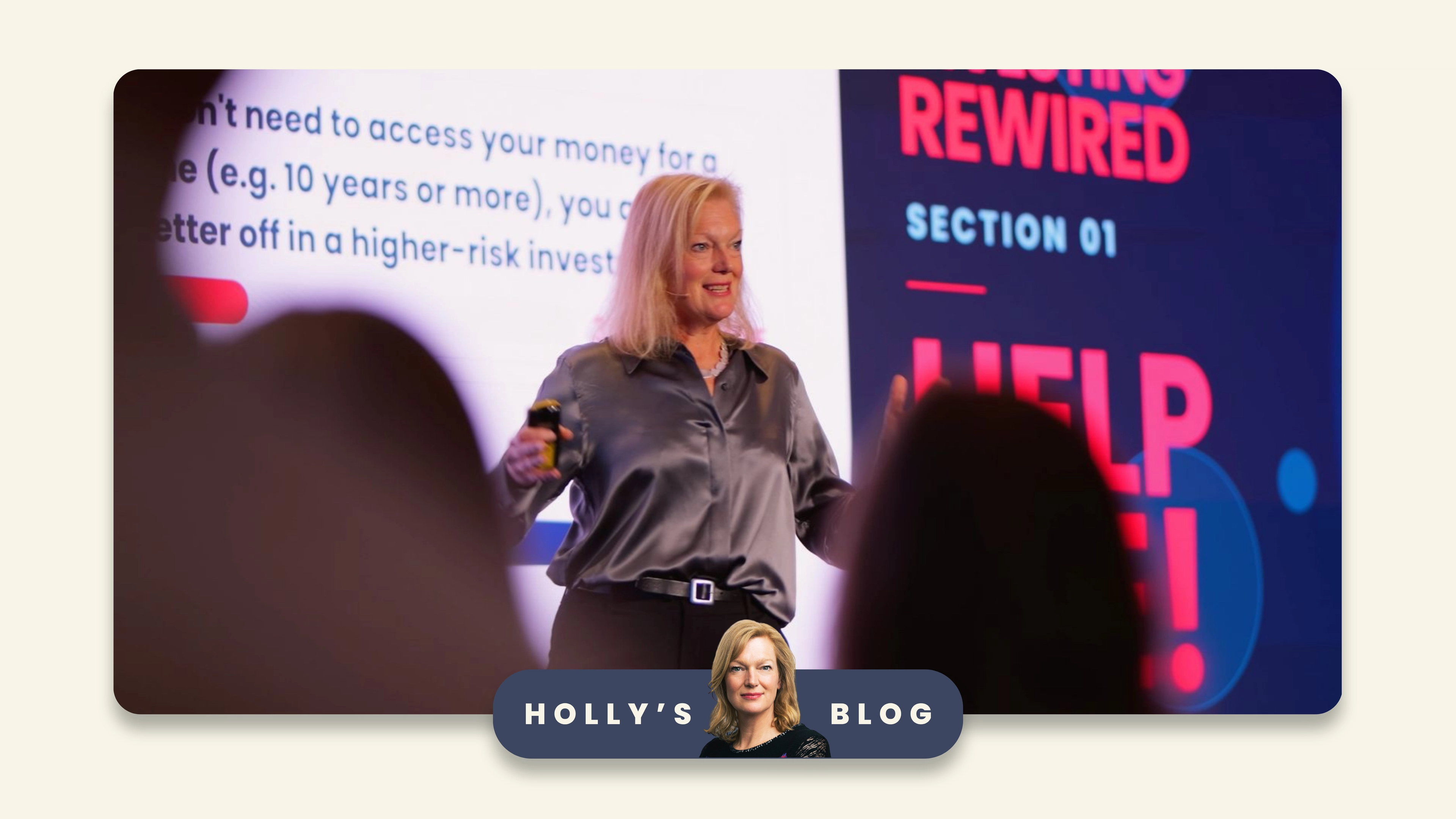
Our Founder & CEO Holly Mackay explains the basics about SIPPs and why they're so attractive in the video below.
Below are some of the most common questions people ask about SIPPs:
Can I choose how my retirement savings are invested?
There are dozens of SIPP providers on the market and there’s a huge range of investments you can select from, too. Shares, funds, bonds, property... the mix and proportion of investments in your SIPP is down to which products and provider you choose. So every time you put some cash into your SIPP, you get to decide what investments to buy with your cash, and therefore you control how your retirement savings are deployed - neat!
How much tax relief do I get on a SIPP?
As well as this, you get Tax relief is money the Government adds to your pension to make up for the Income Tax you've already paid on it. For a SIPP, everyone gets tax relief at 20% (the basic rate), which boosts the value of your pension automatically. on the contributions into your SIPP from the government as an incentive for saving. This means basic rate taxpayers get 20% tax relief, while higher rate taxpayers get 40% and additional rate taxpayers get a whopping 45% if they claim the rest via their self-assessment tax return. So a higher rate taxpayer would only need to put 60p into their SIPP to receive 40p in tax relief and take the total to a full pound! Fab. The table below breaks it down:
Usual Tax Band | Basic Rate | Higher Rate | Additional Rate |
Tax Relief | 20% | 40% | 45% |
Correct as at 2026-27 tax year.
At what age can I access a private pension?
You can't access the cash in a SIPP until you're at least 55 years old, so you need to be absolutely certain you won't need the money any earlier than this before you commit to it. This threshold will increase to 57 years old from 2028 and there's a good chance it will continue to rise to reflect an ageing population and similar changes to the State Pension age.
How much of my SIPP can I take tax-free?
As with most pension schemes, from the age of 55 onwards you can withdraw 25% of the value of your SIPP - up to a maximum of £268,275 - tax-free. Anything beyond this amount will be included as part of your taxable income and may be liable for tax such as Income Tax.
Should I choose drawdown or an annuity for my private pension?
When you're ready to retire, you have a choice between opting for drawdown (taking chunks out of your savings at your discretion) or purchasing an annuity (a guaranteed annual income paid out of your pot). SIPPs can accommodate either but it's crucial to check whether your chosen provider offers the route you want to take, as some are limited to only drawdown schemes or only annuities. It's best to check this before you start saving into a SIPP so you don't end up having to make last-minute transfers in the run-up to retirement!
Drawdown vs annuity: Which is best for you?
Is a personal pension right for me?
Is it a good idea for you to open a SIPP? While the idea of taking retirement savings into your own hands sounds appealing, it's not always the best course of action for everyone. Here's a run-down of the key pros and cons of SIPPs.
Discover three reasons why you should open a SIPP today
How much can I pay into a personal pension?
The maximum amount most people can pay into their pensions each tax year is typically £60,000 or 100% of their salary - whichever is lowest. This includes the total of:
- your own contributions (plus any tax relief you receive) and;
- any employer contributions
If you are unemployed or earn under £3,600 a year, then the most you can pay into your pension is £2,880 (this increases to £3,600 with the tax relief applied).
Pension carry forward
If you've used up all of your annual allowance, you may be able to carry over any of your allowance you didn't use up from the previous three tax years through a process called "pension carry forward". You can ask your pension providers for details of how much you saved into each scheme if they’ve not already sent them to you, or use the GOV.UK's annual allowance calculator to check if your pension savings are more than your annual allowance and if you have any unused allowance to carry forward.
The rules for the annual allowance are slightly different for higher earners due to something called the "tapered annual allowance" - more on this next.
What are the the rules for the highest earners?
If you’re a higher earner, your annual allowance may be less than this thanks to something called the 'tapered annual allowance', which can reduce your allowance to as low as just £10,000 depending on how much you earn.
The tapered annual allowance affects individuals whose:
- ‘threshold income’ is above £200,000 and;
- ‘adjusted income’ is above £260,000
Threshold income does not include your pension contributions, while adjusted income does.
Those who meet the criteria above will see their annual allowance gradually reduce by £1 for every £2 of ‘adjusted income’ above £260,000. For example, if your adjusted income was £270,000, your annual allowance would be reduced to £55,000. This is because, as you're £10,000 over the adjusted income threshold of £260,000, your annual allowance is reduced by £5,000 - taking it down to £55,000.
The tapering stops at £360,000, preserving a minimum of at least £10,000 for even the very highest earners.
Until 5 April 2024, there had also previously been a lifetime pension allowance which was capped at just over £1 million. This has since been abolished to allow individuals to save more into their pension - as long as you stick to your relevant annual allowance for each tax year.
What can I put in my personal pension?
One of the main benefits of a SIPP is the amount of control it gives you over what to invest your retirement savings in. You can choose what you like! Depending on the provider you go for, you can invest in different types of asset such as:
It's all about choice. Different providers will have different combinations and ranges of investments to choose from.
For example, the exceedingly popular provider Vanguard offers around 85 in-house funds and ETFs (but no access to individual shares), whereas Fidelity has a much wider range stretching into the thousands with a choice of funds, ETFs, investment trusts and shares. Both were winners of our coveted Best Buy Pension award in 2026.
How much SIPP choice should confident investors take on?
When it comes to what to put in your SIPP, more confident savers may prefer to choose their own range of individual shares, but we wouldn’t typically suggest this route for the newer or less confident investor.
How many funds should intermediate investors hold in a private pension?
If you're reasonably confident when it comes to investing, you know what you want and don't mind handling some of the decisions yourself, selecting a decent-sized range of funds - say, 8 to 12 - should suffice.
What’s the easiest way for beginners to invest in a SIPP?
And if you don’t want to research a pool of funds and you aren’t sure what to do, consider a ready-made investment. This is a great way to start for the less confident investor who would prefer to have all the difficult decision-making handled for you.
How much does a personal pension cost?
There are three basic elements to the cost of having and running a SIPP account. These typically include:
- Admin fees: The annual administration fee for providing the pension - this will usually be between 0.35% and 0.5% each year and will be levied by the company you open up the account with.
- Dealing charges: The fees charged when you buy or sell funds or shares. It’s normally about a tenner to buy a share and buying funds is usually less or free.
- Fund management fees: The annual charge from the fund manager for managing your investments. This will apply if you buy managed funds inside your pension, which is typically the case. This is usually about 0.75% every year.
Most people wonder why it can’t just be bundled together as a single and simple fee, but the UK financial services regulator - the FCA - has been clear that it wants people to know what they are paying for the different parts of the overall service.
All in, most people should not be paying more than about 1.3% a year. So that's £13 on every £1,000 invested. The biggest variable will be the charges on the underlying investments within your SIPP, and these will vary depending on what you choose - from lower-cost options like ETFs to higher-cost assets like investment trusts.
This is one of the main reasons why it's key to shop around before you select your SIPP provider, to make sure you get the best value for money for what you want. If you're looking for the lowest-cost SIPP providers on the market, check out the winners of our Best Low-cost SIPP awards for portfolios under and over £50,000.
How do I choose a personal pension?
If you've decided to open a SIPP, there are dozens of providers to choose from and this can make it tricky to see the wood for the trees. But that's where we come in! Head over to our Pension comparison table to browse the market, see the winners of our exclusive Best Buy Pension awards and read what real customers think!
Find the right SIPP for you