


Spring Statement 2026
What Do the OBR's New Forecasts Mean for Growth, Inflation and Interest Rates?
Written by Boring Money
4 Mar, 2026
The Spring Statement came and went with barely a ripple — but the economic backdrop it landed in is anything but quiet. The Chancellor pointed to falling borrowing costs and rising real wages, while the OBR trimmed its growth forecast and nudged inflation expectations lower. The bigger story, though, is what happens next: if the conflict in the Middle East pushes oil prices higher and inflation spikes again, the carefully laid predictions in Wednesday's statement could unravel fast.

You might have blinked and missed the Spring Statement. Not only did the Chancellor announce next to nothing in terms of new updates, her big moment was comprehensively overshadowed by the situation in the Middle East. If it persists, the conflict may derail the carefully laid economic predictions of the OBR and necessitate a rethink on spending.
Reeves used her moment in the Commons to point out that borrowing costs and inflation had been falling, which puts the UK in a better position to weather the storm. She said the average family would be £1,000 better off by the next election, based on the Treasury’s calculations of household disposable income. She added: “Real wages have now risen more since the election than they did during the first 13 years of the previous government.”
The figures are, naturally, disputed by the opposition, who pointed out that the Treasury figures don’t take account of the impact of frozen tax bands. Equally, all bets are off if the war in the Middle East escalates, putting pressure on oil prices and lifting inflation.
The Spring Statement was very much the low-key update the government had promised. After a period of significant fiscal events, today’s announcement amounted to little more than a refresh of the economic projections.

Economic updates
The Spring Statement revealed the latest set of OBR forecasts for the UK economy. The headline change was a cut to the expected growth rate for 2026 to 1.1% from the 1.4% it predicted in last year's Budget. The driving factor was higher-than-expected unemployment levels. It upgraded estimates for both 2027 and 2028 to 1.6%, from 1.5% previously.
Dan Coatsworth, head of markets at AJ Bell, says that it’s not an inspiring picture, even if Reeves pushed the positives.
While the numbers are generally pointing in the right direction, it still feels like we’re watching progress in slow motion. The OBR’s new forecasts indicate a more lacklustre economy near-term, meaning the UK continues to be stuck in the mud.
Although there is hope on the horizon in the form of upgraded economic growth forecasts for 2027 and 2028, that is of little consolation to businesses hoping for a sales boost this year. It’s also worrying for consumers having to contend with a weak jobs market, as there is no sign of a big improvement soon.
The weakness in the economy would usually lead to an increase in borrowing to fill the hole. However, stronger-than-expected tax receipts are likely to offset the economic weakness. Reeves said the OBR now expected the government to borrow £18 billion less than it had expected in November.
UK borrowing has come in a little lower than expected so far this year, giving her some short‑term breathing space. However, this improvement is largely driven by lower debt‑interest costs rather than any meaningful easing in the underlying fiscal pressures. Spending remains elevated, once interest is stripped out, and revenues continue to disappoint.
Equally, while higher tax revenues have improved her fiscal position for the time being, the OBR said Reeves had increased taxes to a record level, which could damage economic growth and put people off earning more money.
Inflation
The OBR now expects inflation to fall to 2.3% through the year. This is lower than its November estimate of 2.5%. It estimates that inflation will reach the Bank of England's target rate of 2% by the end of 2026.
Inflation has been falling in recent months, largely due to food and energy disinflation. Further declines are expected, notably as budgetary measures kick in to lower energy inflation from April. Recent comments from policymakers suggest that the Bank of England is highly likely to seize on the subsequent decline in headline inflation to cut interest rates further.
However, Rees remains concerned about underlying stickiness in services inflation, believing it may not come down as fast as the OBR expects.
The impact of the Middle Eastern conflict
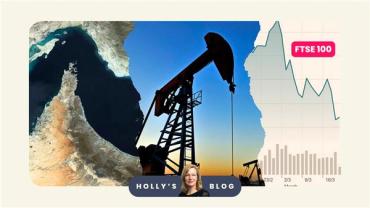
The Middle Eastern conflict could change all these predictions in a heart-beat. Disruption to oil supplies could pose a threat to inflation and, by extension, to the wider UK economy. The OBR said the UK faced a “very significant” economic hit. The US attacks on Iran have already prompted soaring energy prices and weaker stock markets. The AA has been forced to issue a warning to motorists not to panic buy fuel.
Events in the Middle East threaten to hold back the UK economy even more if the spike in oil prices is sustained for weeks or months. That could drive up inflation and force the Bank of England to pause any further interest rate cuts in the interim.
Higher inflation and rates no longer coming down has negative connotations for consumer and business sentiment, and in a worst-case scenario, could lead to economic disappointment and mean the OBR’s already-downgraded forecast is still too high. That situation might also mean Reeves’ prediction that UK employment is ‘set to peak later this year’ is also too optimistic.
The hopeful scenario would be that the conflict is short-lived, the impact on energy prices is minimal and markets recover quickly. However, Iran has already mustered more of a defence than initially expected, and if the US has a long-term plan, it is not sharing it with anyone.
If the Spring Statement is not causing much of a stir, it is because the predictions it provides could all be obsolete in a matter of weeks, with the situation in Iran changing the goalposts. The conflict has already raised the cost of borrowing, and could derail hopes of an interest rate cut this month. For many reasons, investors should hope that the situation is resolved sooner rather than later.