




Global Public Debt Crisis: World Debt Set to Exceed 100% of Global GDP by 2030
Written by Boring Money
27 April, 2026
In its Annual Report for 2025, the IMF reported the grim statistic that the world's total public debt had exceeded $100 trillion and is expected to approach 100% of global GDP by the end of the decade. The political pressures of ageing populations and slower economic growth are amplifying spending demands and, by extension, borrowing needs for governments across the world.
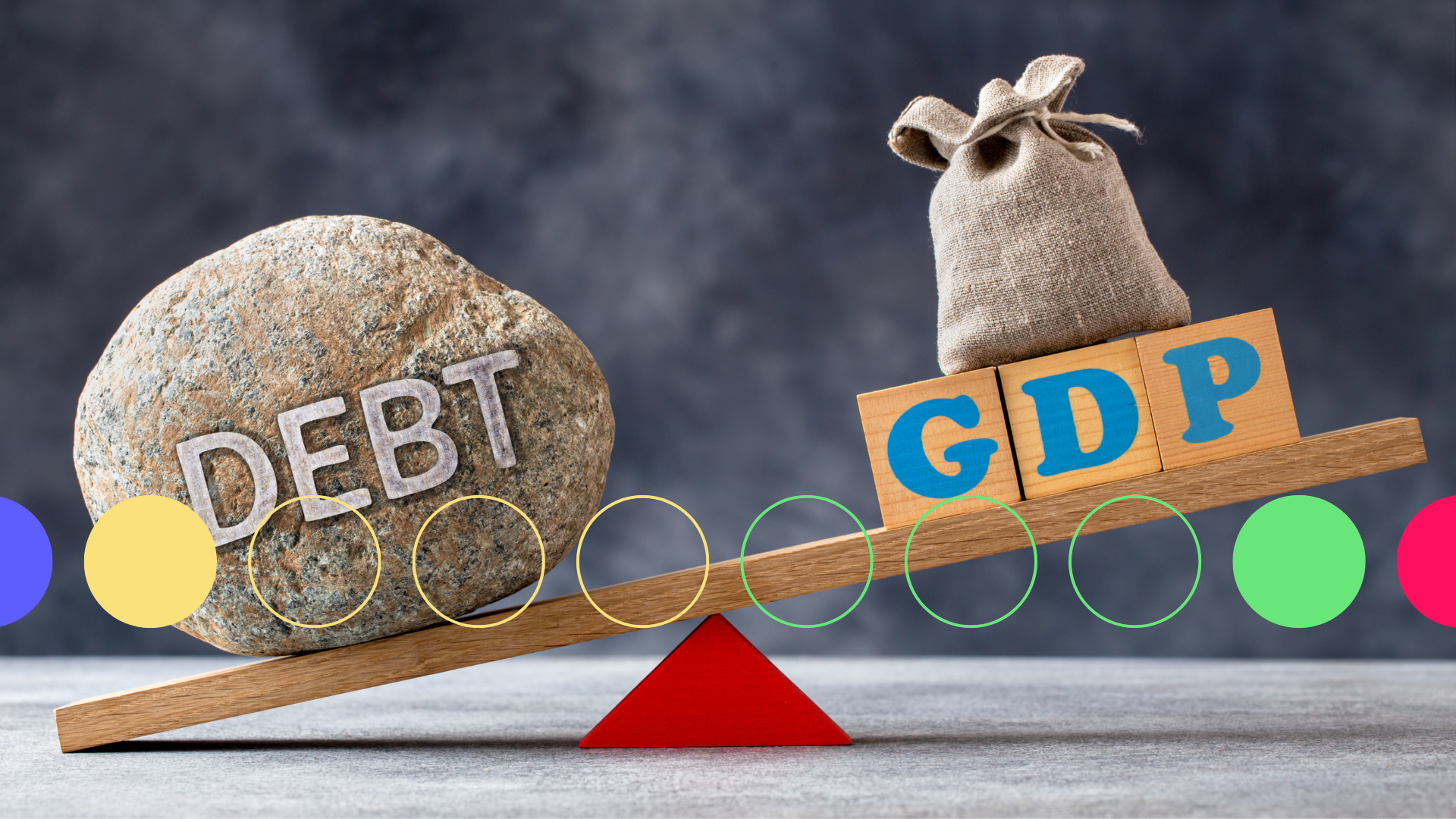
The report said debt servicing costs are crimping governments’ ability to finance much-needed investment or critical spending for development, while a shortfall in foreign aid poses an additional risk for low-income countries. There is also the thorny question of defence spending at a time when traditional alliances are breaking down and geopolitical tensions have accelerated.
The IMF says that although about two-thirds of countries anticipate stabilising or reducing their debt by 2029, levels will remain elevated compared with pre-pandemic figures. Equally, governments have generally underestimated their ability to curb spending, particularly with the myriad pressures they face today.
This raises the question of how much debt is too much. To what extent do high government debt levels threaten to destabilise economic prosperity? And can anything be done about it?
There is little consensus on what constitutes too much government debt. It makes intuitive sense that a country that is spending significant amounts on debt repayments has less money for spending projects to promote growth – infrastructure development and so on. However, it is difficult to pinpoint the exact level where this happens.
In a benchmark academic paper in 2010, academics Carmen Reinhart and Ken Rogoff analysed decades of data from 20 advanced economies, comparing national debt to gross domestic product. They concluded that when a country has debt that is equivalent to 90% of their GDP, its growth rate would be half of what it would be in times when debt was at a more normal level.
As it stands, this would put Japan (237%), Italy (135%) the US (124%), France (113%), Spain (102%), and Canada (111%)[1] in the danger zone. The UK’s debt of 93.6% looks relatively modest in comparison, but would still act as a brake on growth.
Country | Debt to GDP ratio (%) |
Sudan | 272% |
Japan | 237% |
Singapore | 173% |
Venezuela | 164% |
Eritrea | 164% |
Greece | 154% |
Italy | 135% |
Bahrain | 134% |
United States | 124% |
France | 113% |
Country | Debt to GDP ratio (%) |
Sudan | 272% |
Japan | 237% |
Singapore | 173% |
Venezuela | 164% |
Eritrea | 164% |
Greece | 154% |
Italy | 135% |
Bahrain | 134% |
United States | 124% |
France | 113% |
Source: World Population Review
However, it is clear that the 90% figure doesn’t tell the whole story. Today, Rogoff acknowledges that the figure could not be applied to all countries in all situations. For example, the level of interest rates makes a difference to the sustainability of debt – if a country can borrow at 1-2%, national debt of 90% of GDP doesn’t look so onerous, if they are borrowing at 4-5%, it is problematic.
Also, different countries are afforded greater and lesser flexibility by the market. In general, the US can run far higher debt levels because the US Dollar is the reserve currency of the world. It has a natural market for its debt and there is less chance of a buyer’s strike driving up yields.[2]
Other countries are not given the same leeway. The Liz Truss debacle in the UK was the clearest example: the mini budget made a range of unfunded spending promises, and threatened to push out the national debt. It would still have been some way below that of the US, but bond markets demanded a higher yield to buy UK debt, pushing up borrowing costs. The consequences are still felt in gilt markets today.
Debt levels are causing concern. The Office for Budget Responsibility said:
The simultaneous rise in global interest rates to their highest level in 15 years, coupled with persistently sluggish economic growth, has made the task of reducing the deficit and reversing this rise in debt significantly more challenging.[5]
The recent war in Iran has seen bond yields rise again, as markets have anticipated higher inflation, posing another headache for finance ministers across the world.
Debt levels have become a political problem. Efforts to curb spending and raise taxes have created serious difficulties for incumbent political parties. In the UK, efforts to curb welfare spending have failed after rebellions from backbench MPs. In France, President Macron has faced a series of political crises over attempts to cut the country’s generous, but financially crippling, pension provision. In both cases, the real risk is that bond markets start to demand an ever-higher price to buy its debt, leaving the government with higher and higher debt servicing costs and even less to spend on welfare provision.
Until recently, it appeared that finance ministers may have dodged a bullet. Interest rates were scheduled to fall as inflationary pressures eased. However, the war in Iran has pushed up energy prices, which – in turn – has driven inflation higher. This makes it more difficult for central banks to cut rates, and bond markets are now anticipating flat or rising rates across the major economic for the remainder of 2026.
Another major question is over whether the US will finally see its ‘special privileges’ revoked. In February, the Congressional Budget Office released its marquee report on the US fiscal outlook[6]. It showed that the US national debt is on track to reach $64 trillion within a decade. The tax and spending package Republicans enacted last summer alongside Trump’s immigration policies will significantly increase the deficit, cancelling out the roughly $3 trillion in deficit reduction produced by the tariffs.
It is also an issue in the upcoming German election. Investment group Edmund de Rothschild points out that candidate Friedrich Merz recently said he was in favour of reforming the “debt brake” that has limited German borrowing, but the party then released a program arguing against both the reform and taking on any extra debt, whether in Germany or in Europe.
This means the reform has simply become a bargaining chip in coalition talks.
Hetal Mehta, head of economic research at St James’s Place believes debt will become a significant issue in 2025. She says:
Fiscal policy will come under intense focus, as governments work to reconcile their election promises with mounting market concerns about debt sustainability.
In many advanced economies, the balance between stimulating growth and maintaining fiscal discipline will be critical, especially in the face of aging populations and structural budgetary pressures. For the US, there could be some growth from expectations of lower taxes in the near term, but higher inflation (and more modest interest rate easing) will most likely weigh on growth eventually.
She says that while the US can leverage its economic scale and exceptionalism to pursue large fiscal deficits, this approach is not available to the euro area.
Ther biggest question is over whether the US will finally see its ‘special privileges’ revoked. If Donald Trump enacts the promises he made on the campaign trail, it will push the deficit even higher. Research from the Committee for a Responsible Federal Budget showed Trump's plans would add $7.5 trillion to the deficit over 10 years.[4]
It is possible that this would finally galvanise bond markets to push up yields on US debt. Given how high debt levels are at the moment, this would create a real problem for the incoming government. It is possible that Elon Musk and Vivak Ramaswamy will find savings as part of their stewardship of the Department of Government Efficiency, but it will be difficult at a time when ageing populations are putting a greater strain on the public purse. If the US has a ‘Liz Truss’ moment, this could have repercussions for financial markets across the world.
Although falling interest rates may help, it is increasingly clear that debt levels are unsustainable and need to be tackled. This is likely to set incumbent governments at odds with their electorates. As a result, debt levels are likely to be a destabilising force in the year ahead.
It is possible that this, alongside the erratic policymaking from the current administration, would finally galvanise bond markets to push up yields on US debt. Given how high debt levels are now, this would create a real problem. Attempts to cut the deficit – specifically through the Department of Government Efficiency – have proved futile. If the US has a ‘Liz Truss’ moment, this could have repercussions for financial markets across the world.
It is increasingly clear that debt levels are unsustainable and need to be tackled. This is likely to set incumbent governments at odds with their electorates. As a result, debt levels are likely to be a destabilising force in the year ahead.
--------
[1] World Population Review, December 2024
[2] NPR, June 2024
[3] FT
[4] Reuters, October 2024
[5] OBR
[6] Politico