

Is gold still a safe haven in 2026? What investors need to know
Written by Boring Money
1 April, 2026
Gold was supposed to be the safe harbour. Instead, it's been caught in the same storm as everything else. Rising interest rates, a stronger dollar, leveraged traders bailing out and rumours of central bank selling have all knocked the shine off precious metals. The picture isn't entirely bleak — Goldman Sachs still sees $5,400/oz by end of 2026 — but the easy gains may be behind us for now.
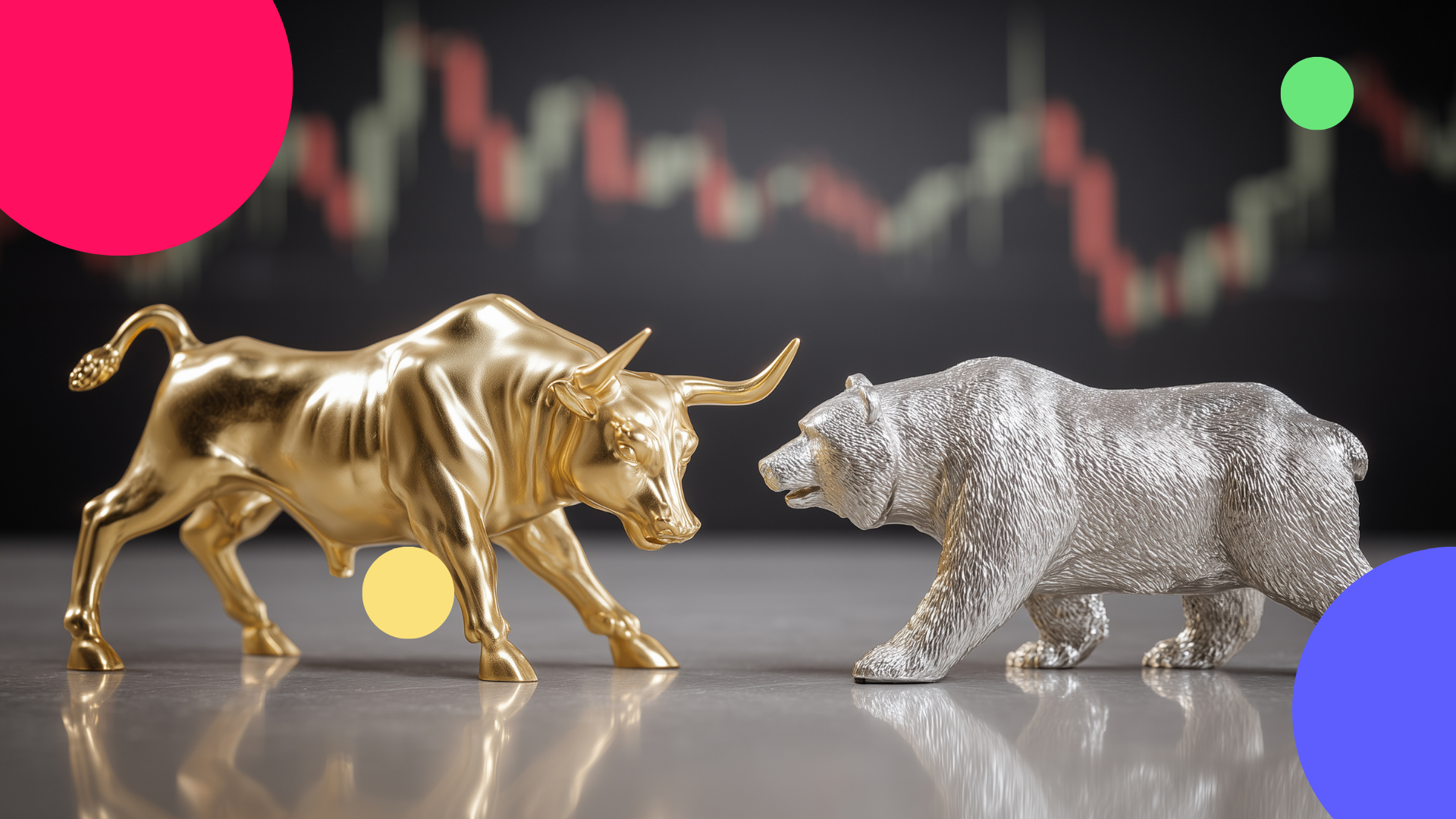
Why has the gold price fallen during the market crisis?
The past few weeks have seen global financial markets experience turmoil not seen since 2022. Many investors learnt a valuable lesson – that The process of spreading your investment portfolio across different asset classes, such as partially in shares and partially in bonds, in order to reduce risk.between A type of asset that represents a loan, usually issued by a government, company or agency that wants to raise money to fund its operations. and Another word for shares or stocks. may not help your portfolio when the crisis has been created by higher Term used to describe how quickly the prices of goods and services is rising over a period of time. In periods of high inflation, prices are increasing rapidly, whereas low inflation means prices are increasing by only a small amount. and rising The amount that a lender charges someone for taking out a loan or a mortgage. It's calculated as a percentage of the amount borrowed - for example, 3%.. The crisis of the past few weeks has delivered another important lesson – gold might not help you either.
Over the past couple of years, investors have turned to gold both in response to an astonishing rise in price, but also to protect themselves against geopolitical uncertainty. Gold has been a fairly reliable defence against the bouts of volatility created by tariff wars and the US administration’s previous military incursions. It has performed astonishingly well, up 165% over five years, with silver also doing well.
The graph below illustrates returns on £1000 invested in March 2021.
Data correct as at 01/04/2026
As a result, gold’s recent wobbles may have come as a surprise. The natural assumption may have been that gold would provide some protection against the market volatility created by the war amongst the USA, Israel, and Iran. Jason Hollands, managing director at Evelyn Partners, says that while gold has had a traditional role as a safe haven during times of geopolitical stress, there are a couple of problems with the assumption this time round:
First, gold typically exhibits an inverse relationship with the US dollar, and the recent strength in the dollar has been a significant headwind. Second, government bond yields across the globe have risen as inflation expectations have increased; higher yields raise the opportunity cost of holding a non-income-generating asset such as gold.
Lothar Mentel, chief investment officer at Tatton Asset Management agrees that precious metals are highly sensitive to interest rates.
In the post-pandemic period, gold has often acted as a liquidity drain, rallying as the money supply increases. Now, central bank tightening would mean less liquidity in the financial system, hence weaker gold.
These are the technical reasons. But gold has also been subject to a momentum trade, which amplified its rise, but is also exacerbating its fall.
Those who had bought into gold as a speculative momentum trade would probably have expected the Iran War to boost prices, so when the opposite happens, many will have to liquidate their positions – especially if they are leveraged. That helps explain why the fall has been so sharp.
However, it does not explain why it started in the first place. The trigger seems to have been growing expectations that institutions like A state-owned investment fund, typically built from a country's surplus oil revenues or foreign currency reserves. Governments use them to invest in stocks, bonds, property and other assets on behalf of their citizens. Because they manage vast sums, their buying and selling decisions can move global markets. and central banks might start selling their bullion reserves. In particular, Turkey has been a source of concern, with the central bank saying it would be a “natural choice” in difficult circumstances to turn to gold-based transactions to support How quick and easy it is to convert an investment into cash without losing significant value in the process. In other words, how easy it is to sell and how long it takes to get your money in return.. It is a clear risk. The gold price has been supported by central bank buying, particularly central banks that have been subject to sanctions or fear they might be. Should it reverse, it would be a problem.
Gold’s ‘safe haven’ status can be a problem when markets turn. If investors are sitting on losses elsewhere, they may tend to sell those assets that have performed well and where there is still market demand. Gold may have been a victim of its own success.
Short-term price volatility does not necessarily undermine gold’s status as a safe haven.
Gold is a safe haven asset in the same way that government bonds are risk-free… If you own physical gold, you will always have a physical asset to trade, but that does not stop volatility. There is a difference between gold being a safe haven (a real asset if everything breaks down) and gold prices being a safe haven trade (a bet that prices will go up in times of panic).
Is gold still a good investment for the long term?
Recent price volatility doesn’t detract from gold’s use as a commodity in a disaster, and – in his view – its safe haven status still holds. Certainly, plenty of investors still believe that persistent geopolitical risks, strong central bank demand, and a weaker US dollar will support gold in the longer-term.
In a note, Goldman Sachs said it was still positive on gold, despite the shift in monetary policy expectations. It continues to forecast gold prices of $5,400/oz by the end of 2026, fuelled by central bank buying and, ultimately, a rate cut by the The central bank of the United States, responsible for setting American interest rates and managing the money supply. Its decisions ripple far beyond US borders — when the Fed raises or cuts rates, it affects the dollar, global borrowing costs, and asset prices from bonds to gold worldwide. Often shortened to "the Fed.". It also believes some of the speculative buying around gold is likely to normalise.
There are those who are more sceptical, however, saying that the environment may have changed for gold and investors still need to take into account the high price.
Rising geopolitical tensions have pushed energy prices higher, increasing the risk that inflation remains elevated and complicating the path for monetary easing. A higher‑for‑longer rate environment would keep real yields elevated, posing a headwind for gold.
She says central bank buying is easing, and while some central banks may top up gold reserves as the price weakens, it is unlikely to make a material difference to the price, which is still driven by investment flows. ETF Money leaving an investment or fund. When investors sell out of an ETF, for example, the cash flows out, reducing the fund's size and often pushing the underlying asset price down. The opposite is inflows. have exerted a persistent drag on prices in recent weeks. This could reverse if rate cuts come back into focus.
Ultimately, gold’s direction will depend less on geopolitical headlines alone and more on how those events shape inflation, monetary policy expectations and real interest rates. For now, macro forces, not geopolitics alone, are driving gold prices.
In the long-term, waning trust in US power and influence could continue to support gold, as investors look for alternatives to the Dollar and central banks look for alternatives to US treasuries for their reserves. However, in the short-term, the gold price has run up a long way, and history suggests that sharp rallies tend to be followed by a few years of dull performance. While the price has stabilised in recent days, it is difficult to see it making significant progress while some of the macroeconomic risks persist.