




Andy Burnham as PM: Impact on UK markets, gilts and Investments
Written by Boring Money
3 July, 2026
Will Andy Burnham be good or bad for your investments? Financial markets have so far reacted calmly to the prospect of a Burnham premiership, helped by his commitment to fiscal rules. We explain what his policies could mean for UK shares, gilts, mortgage rates, savings and the UK economy.
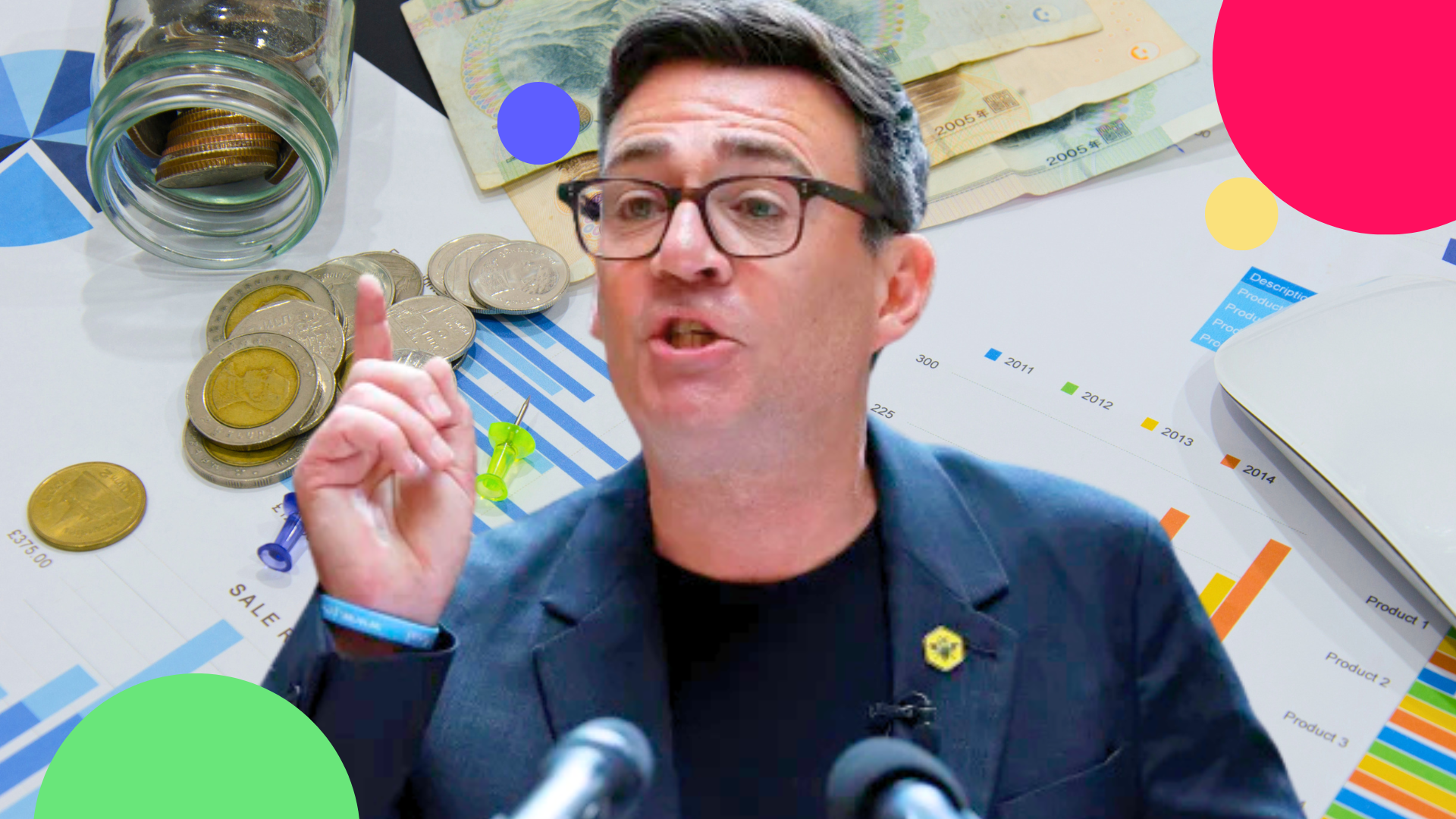
UK financial markets have got pretty used to political change by now. So far, they have greeted the prospect of an Andy Burnham premiership with a shrug, which may be the best possible outcome in the circumstances. For the time being, there are only a few details on the economic priorities of a Burnham administration, centred on growth and devolution. What, if any, conclusions can be drawn about the potential impact of the UK’s likely new Prime Minister.
Will an Andy Burnham government spook the bond market?
The biggest question on Andy Burnham’s premiership is over borrowing. The worry has been that he will pick a free-spending Chancellor who would either push up borrowing and create a When the value of government bonds decreases and causes borrowing to spike, or push up taxes and create an economic crisis. The UK still has higher borrowing costs than the US and much of Europe as a result of Liz Truss’s ill-conceived challenge to fiscal prudence in 2022. It cannot afford another episode of rule-breaking.
If Burnham and his new Chancellor were to spook the government bond market, it would be universally bad news for UK assets. Mortgage rates would rise, impacting the housing market. It would lift borrowing costs for companies, constraining their ability to invest. The performance of small and medium-sized companies has a relationship with government bond yields, and they could suffer yet another setback if those yields rose. The only possible winner might be the pound.
What Burnham's fiscal rules mean for your mortgage and savings
It would be a very foolish Chancellor who did not recognise this reality. Despite some early loose talk, Burnham has committed to the fiscal rules. This has reassured the UK government bond market, which has been calm in response to the prospect of Burnham as Prime Minister. If anything, A gilt is a fixed income bond issued by the UK government. They are so named because, historically, the paper certificates used to issue these bonds had a gilt (gilded) edge. The government issues gilts in order to fund public spending.yields have moved slightly lower – although it is difficult to disaggregate the impact of UK politics from the end of the war in Iran. The UK 10-year gilt yield has come down from 4.8% on the day Starmer resigned, to 4.7% today. The two year is down from 4.2% to 4.1%.
Alex Everett, Investment Director, Rates management, at Aberdeen Investments welcomed Burnham’s “renewed commitment to fiscal responsibility”, supported by “an ambition to reduce the UK’s welfare bill – a politically difficult topic which signal some willingness to take challenging decisions”. He says this should provide the gilt market with near-term reassurance that a Burnham government would be mindful of fiscal constraints as well as political priorities.
How is the UK economy holding up under political change?
For all the talk of the UK economy as a basket case of economic decline, it has been relatively resilient. GDP growth for the first quarter of 2026 was 0.6% and it is hoped that the resolution to the war in Iran should minimise any economic damage. The problem for the UK has been that every time it looks set to break out of its ‘go slow’ pattern, something comes along to derail it – tariffs, the Iran war, political upheavals. It may be that Burnham turns out to be a ‘lucky general’ and benefits from a period of relative stability for the UK economy, when it can finally start to revive.
Craig Rippe, Head of Multi Asset at Keyridge Asset Management, says Burnham is expected to maintain Labour’s commitment not to raise the rates of A type of tax charged by the UK government if your earnings exceed a certain threshold, called the Personal Savings Allowance. Any amount over this is charged at different rates depending on your annual income., employeeA type of tax that individuals who earn over a certain amount pay to the UK government. It's used to fund state benefits, including the State Pension, healthcare services like the NHS, unemployment benefits, and other social welfare programmes.or Tax added to consumer goods and services like food and drink during this Parliament, which should support growth, even if it leaves him less flexibility to invest in strategic areas of the economy.
He has signalled interest in targeted relief, including business-rates reductions for pubs and smaller high-street firms, and possible support for employers affected by higher National Insurance costs. The corresponding revenue is more likely to be sought from property, land, estates or selected commercial activities than from broad-based increases in taxes on employment.
Overall, the stability should be welcomed by UK businesses.
The longer-term question is whether his devolution agenda and other economic initiatives can bring about a step change in growth for the UK. Burnham appears to recognise the importance of targeted funding, floating the idea of “good growth funds”. These are designed to consolidate public and private investment locally, making funding more accessible for local start-ups and scale-ups. He has said that he wants to create an “Innovation Nation”, by supporting “scientists, technologists, entrepreneurs, and creatives”. If he could turn rhetoric into reality, it would be transformative for the UK economy.
Which UK shares could benefit from a Burnham premiership?
UK larger companies have been having a good run. TheAlso called “Footsie”, the name for the share index made up of the largest 100 companies by market capitalisation (total value of all shares) listed on the London Stock Exchange. is up 22% over one year, compared with the An index that tracks the performance of the 500 largest publicly traded companies in the United States. It's often used as a benchmark for the overall global stock market. growth of 24%, as of 29 June 2026. It is ahead of European markets, with theA stock market index made up of leading Euro-zone 'blue-chip' companies. They serve as a benchmark for the rest of Europe up just 18%. However, small and mid-caps have borne the brunt of political upheaval, and they are likely to be the canary in the coal mine for any recovery.
A lot of any recovery will be 'vibes' based. Smaller companies have generally been doing fine in terms of their operational performance; it is sentiment that has held them back. According to Boring Money Data, UK economic sentiment hit a record low of -42.5 in April but has since improved for a second straight month, reaching -25.3 in June. It's still firmly negative territory, but after a brutal start to 2026, two consecutive months of improvement is the first real sign the mood might be turning. If Burnham can create the right mood for the UK, domestic investors – both institutional and retail – may have more inclination to re-examine the UK market.
There are specific sectors that could benefit from a Burnham premiership.
Should the new government exercise rigorous fiscal discipline alongside growth boosting reforms, sectors that have been lagging and are sensitive to bond yields – such as residential construction, property and retail – could rebound. The UK banking sector remains attractive, continuing to benefit from favourable factors such as strong earnings momentum, a steepening yield curve, share buybacks and attractive valuations.
Infrastructure groups could also benefit if he managers to revive housebuilding and key projects. He has even suggested reviving the northern leg of HS2 between Birmingham and Manchester via a public-private partnership model. IG Group says that could be good for major contractors involved in rail and infrastructure projects, including Kier Group, Morgan Sindall and Balfour Beatty.
Ben Russon, portfolio manager at ClearBridge, says it is important not to overstate the link between Westminster politics and UK equity returns.
A large proportion of the UK market’s earnings are generated overseas, meaning global growth, commodity prices, currency movements and sector dynamics often matter more than the domestic political cycle.
He says the lack of any significant reaction from stock markets is encouraging.
The market’s relatively calm response reflects a simple judgement: political change is manageable if the process is orderly and the fiscal constraints remain clear. Politics matters, but it is certainly not the whole story for UK equities.
The bottom line for investors
Perhaps most importantly, Burnham has an opportunity to change the mood in the UK. A lot of the UK’s recent problems have been a problem of sentiment rather than reality. Burnham’s success may depend on the ‘good vibrations’ he can generate.





Post a comment:
This is an open discussion and does not represent the views of Boring Money. We want our communities to be welcoming and helpful. Spam, personal attacks and offensive language will not be tolerated. Posts may be deleted and repeat offenders blocked at our discretion.
Your opinion matters
Be the first to comment.