




Should you invest in crypto? What the experts (and the numbers) really say
Written by Boring Money
23 July, 2026
Trump made $1.4bn from crypto last year. Most investors didn't make a penny. So is crypto a genuine investment opportunity, a pyramid scheme, or just FOMO dressed up as a strategy? We look at the numbers, the risks, the regulation - and whether it deserves a place in your portfolio.
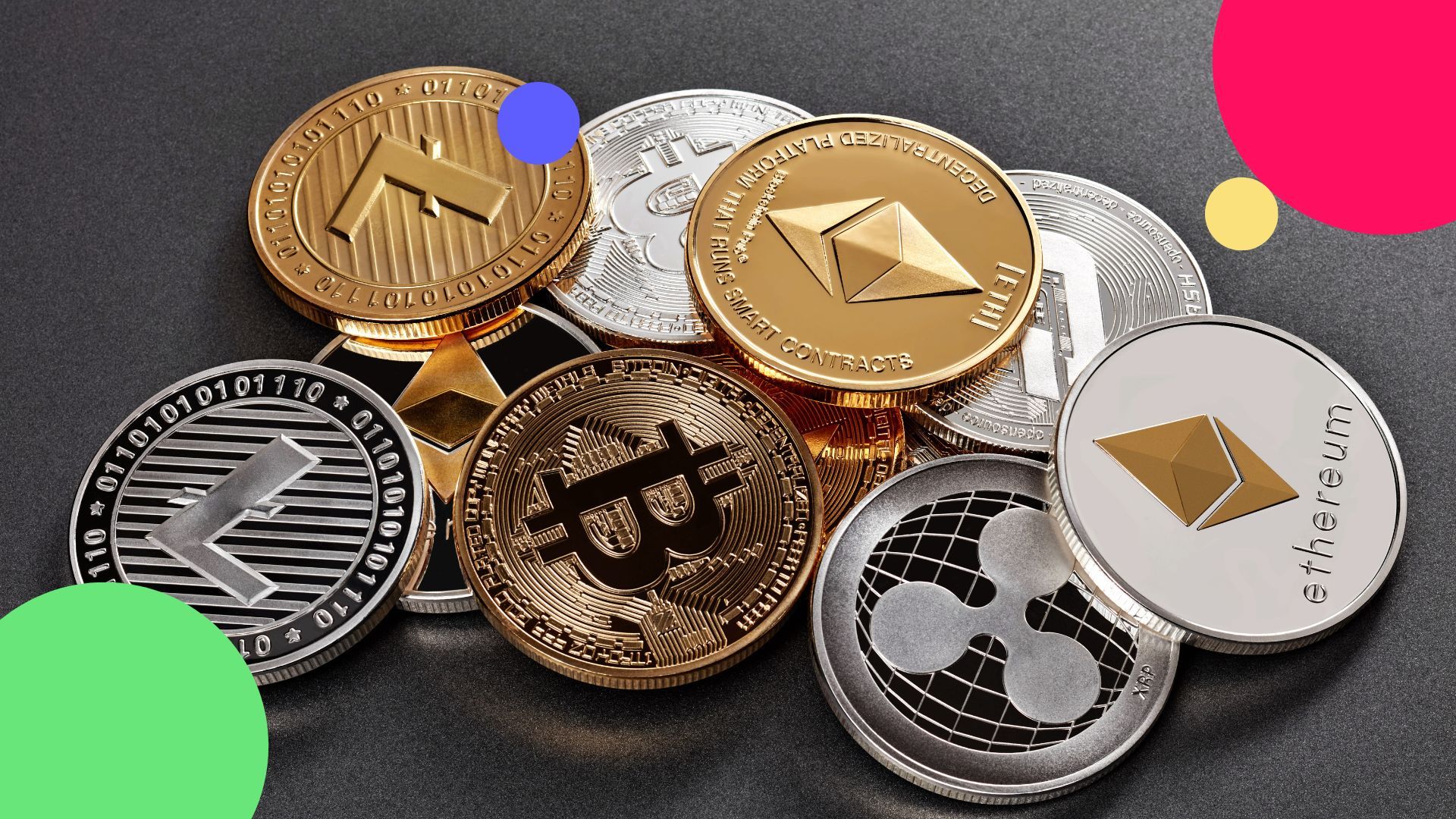
Is cryptocurrency a pyramid scheme?
Donald Trump released his annual earnings at the start of July. Of the eye-watering $2bn he made last year, around $1.4bn came from A type of digital or virtual currency that uses cryptography for secure and decentralised (not managed by a central bank or government) transactions. Examples of cryptocurrencies include Bitcoin and Ethereum. , including new crypto products and meme coins. He’s not the only one making money from crypto assets. The UK’s Nigel Farage has also been on the fringes of the crypto ecosystem, receiving financial support from crypto billionaires.
This is where FOMO may be taking over for many investors. Are they missing out on big gains to be made from crypto? Those who recognised the opportunity early are now sitting on millions and, as Trump and Farage have showed, it can seem like a route to easy profits. Those who invested in Bitcoin a decade ago could have bought a single Bitcoin for around $500. Today, it would be trading at over $47,500.
However, it is also worth noting that the recent history of cryptocurrencies is different – and most people have not been making any money. Over one year, the Bitcoin price has dropped 46%, while Ethereum prices are down 49.2% [1]. Donald Trump may have made plenty of money on his meme coin, but investors have not: it launched at $45 in January 2025 but is now just $1.50.
This has reinforced the idea for some that crypto is essentially a pyramid scheme. These currencies are not backed by any assets or governments; they are simply a unit of exchange. As such, they need to find more and more people to buy them for the price to continue rising. The worry is that they can’t find more people to buy and the price rises have stalled.
However, it is also possible to argue that this is just a short-term blip in the professionalisation of the cryptocurrency industry. There have been moves recently to introduce proper regulation, to wrap cryptocurrencies in protective structures so they can be sold to retail investors.
Crypto has moved on from its retail-led, boom-bust adolescence. The infrastructure largely works, regulation is tightening rather than retreating and capital is behaving more like institutional capital.
This shift towards legitimacy has started to filter through to the platforms most everyday investors use.
Different types of crypto include:
- Cryptocurrency: Also known as exchange tokens, cryptocurrency is a digital form of currency that is decentralised from any authority (like the government or a bank). An example of a cryptocurrency would be Bitcoin.
- Stablecoins: A type of cryptocurrency that is attached to a stable asset like the U.S. dollar or gold. For instance, USD Coin (USDC) is pegged to USD.
- Meme Coins: A type of cryptocurrency intended to boost digital engagement. They are often based on trends or internet culture jokes, for example, Trumpcoin.
- Platform Tokens: These are digital tokens that work within a specific software system, also called a blockchain. Platform tokens, like Ethereum, are used to pay for services within finance, gaming and computing.
- Non-Fungible Tokens (NFTs): NFTs are a certificate of ownership for an item (like digital art or a song) within a blockchain.
- Governance Tokens: These grant users voting power to make decisions within blockchain projects like Decentralised Finance (DeFi) and Decentralised Autonomous Organisations (DAOs). The more tokens you have, the greater your voting power. An example of Governance Tokens include Uniswap and Aave.
- Utility Tokens: These provide users with access to a specific service or product. For example, Basic Attention Token (BAT) can be used within digital advertising, allowing advertisers to buy ad space.
Can you buy Bitcoin and Ethereum through your investment platform in the UK?
In particular, crypto An umbrella term to describe different types of investments, like EFTs. ETPs are financial securities that track indexes and financial benchmarks. (ETPs) have created an easier way for many institutional and retail investors to access the asset class without having to worry about private keys, digital wallets or unregulated exchanges. The London Stock Exchange now has Bitcoin and Ethereum options. The Financial Conduct Authority (FCA) lifted its ban on retail access to these products from the 8th October 2025.
They are not yet an option on all platforms. Hargreaves Lansdown, for example, says that clients will have to undertake an appropriateness assessment before being allowed to trade and in some cases, the amount that retail clients can hold in these areas will be restricted to 10% of their total portfolio. Nevertheless, it plans to offer crypto Exchange-Traded Note (ETN) is a type of unsecured debt issued by a financial institution to track an underlying market index. trading this year.
Should you invest in cryptocurrency?
There are a number of factors to consider when investing in cryptocurrencies. The participation of institutional investors and supervision by regulators has helped compress volatiltiy at the margin, particularly for bitcoin, says Silenskyte.
These are longer-term, institutionally aligned holders.
Equally, fears that regulation would kill off crypto assets completely have proved wide of the market. Instead, it is acting as a filter, “concentrating capital into assets and structures that meet governance, custody and transparency standards,” says Silenskyte.
There are patterns emerging to crypto performance that may be useful to understand. Like many assets, it thrives on lower The amount that a lender charges someone for taking out a loan or a mortgage. It's calculated as a percentage of the amount borrowed - for example, 3%. rates. In common with gold, it pays no A cash bonus shareholders get in return for investing in something. Dividends can be paid out on a monthly, biannual or annual basis., therefore low real (afterTerm used to describe how quickly the prices of goods and services is rising over a period of time. In periods of high inflation, prices are increasing rapidly, whereas low inflation means prices are increasing by only a small amount.) interest rates create a lower opportunity cost to holding crypto. Higher inflation has been a drag on performance since the start of the year.
Bitcoin increasingly behaves like a macro asset. Its fixed supply, decentralised governance and relatively long track record have led to comparisons with gold. The comparison is imperfect, but the direction of travel is clear: Bitcoin is now more frequently treated as a macro asset rather than a technology platform.
However, it points out that other cryptocurrencies may not behave in the same way.
Other networks typically resemble technology platforms rather than monetary assets. They compete across payments, decentralized finance, tokenization, computing and physical infrastructure. Some are narrowly focused; others are designed as broad platforms capable of supporting multiple use cases
Crypto markets tend to be highly sentiment-driven, following patterns of global The extent an investor is willing to endure fluctuations in the price of their investments. appetite. For this reason, looking at the crypto A financial barometer that measures investor sentiment on a scale from 0 to 100, 0 meaning extreme Fear and 100 meaning extreme Greed. market can be a useful tool to make decisions. It is currently in the ‘fear’ territory, but was at ‘extreme fear’ early this year [2].
There are some threats to its ongoing strength. For example, there is an existential question over the impact of quantum computing and whether it may break the critical code that underpins many cryptocurrencies. Quantum computing remains a nascent technology and until recently, this threat seemed remote, but groups such as Ripple now see it as credible and are exploring post-quantum cryptography as a way to secure wallets.
What are the alternatives to buying crypto directly?
There are other ways to invest in the crypto boom. There are a range of Investment funds that track stocks belonging to companies involved in blockchain technology., for example, that focus on companies providing the technology that supports cryptocurrencies - iShares Blockchain Technology UCITS ETF, for instance, or VanEck Crypto and Blockchain Innovators ETF. These are high risk and have been Describes the price movement of an investment or index. High volatility indicates frequent and significant price movement, whereas low volatility denotes less frequent or severe fluctuations in price., but are investing in real companies with tangible value. Performance has largely mapped the price of the major cryptocurrencies.
Investors could also look at some of the major trading platforms, such as Coinbase, PayPal or Robinhood. While these will have a range of revenue sources, they will be geared to the growth of crypto trading.
Do you have to pay tax on crypto profits in the UK?
A final note is that it is important to be careful on tax. Those trading cryptocurrencies often don’t realise they may need to pay tax on crypto profits. HMRC has significantly expanded its efforts to identify crypto investors through its Cryptoassets Disclosure Facility.
Cryptocurrencies were renowned for being the ‘wild west’ of investing. For many crypto investors this categorisation has stuck and many underestimate how seriously HMRC treats undeclared gains. Even worse, some crypto investors think that gains made through digital assets somehow sit outside the normal tax rules, which is exactly why HMRC is targeting the sector so aggressively.
HMRC states you may need to pay Capital Gains Tax (CGT) if you ‘dispose' of cryptoassets. You do this by:
- Selling them
- Exchanging them with a different type of cryptoasset
- Using them to pay for goods or services
- Gifting them to another person (unless it’s your spouse, civil partner or charity)
If you’ve already paid Income Tax on your cryptoasset, then you do not need to pay CGT. But, once you sell/exchange/gift them, you’ll need to pay CGT on any gain made since you received them.
You need to pay tax if your total gain from disposing of cryptoassets is above the CGT tax-free allowance by:
- Reporting gains to HMRC
- Paying CGT
Cryptocurrency investing has its merits, but investors need to be disciplined. Crypto is A portfolio that is concentrated in similar assets as opposed to being spread across different sectors and industries. , has no asset backing and is hugely volatile. It is a new asset class without established patterns of performance. It may be suitable for a small and speculative investment, but there is a danger in seeing it as a path to riches.
—-
[1] CoinMarketCap
[2] CoinMarketCap





Post a comment:
This is an open discussion and does not represent the views of Boring Money. We want our communities to be welcoming and helpful. Spam, personal attacks and offensive language will not be tolerated. Posts may be deleted and repeat offenders blocked at our discretion.
Your opinion matters
UK sterling is a fiat currency. It carries the familiar promise—“I promise to pay the bearer…”—yet modern money isn’t backed by gold or any physical commodity. Its value rests entirely on trust: trust that the UK government won’t default, trust in the central bank’s stability, and trust in the wider financial system. The challenge with fiat money is that it is designed to lose value over time. Inflation targets of around 2% per year guarantee that the pound in your pocket steadily erodes. Crypto assets, particularly Bitcoin, operate on a different premise. They are also based on trust, but trust of another kind: trust in mathematics, decentralisation, and fixed supply. Bitcoin cannot be devalued by printing more of it. There will only ever be 21 million coins, full stop. Holding a small allocation of crypto can be seen as keeping a foot in both camps—exposure to traditional currency and exposure to a digital asset that isn’t subject to monetary expansion. Meanwhile, the macro picture raises its own questions. The United States now carries close to $40 trillion in national debt. What realistic mechanism exists to reduce that burden? Investors are left with more questions than answers, and uncertainty rarely inspires confidence. So where does that leave people deciding whether to invest? Opinions vary widely, and the debate isn’t going away. What’s everyone else’s view?