



How to Read and Understand ETF Ticker Symbols: A Complete Guide to ETF Terminology for Beginners
By Boring Money
19 May, 2025
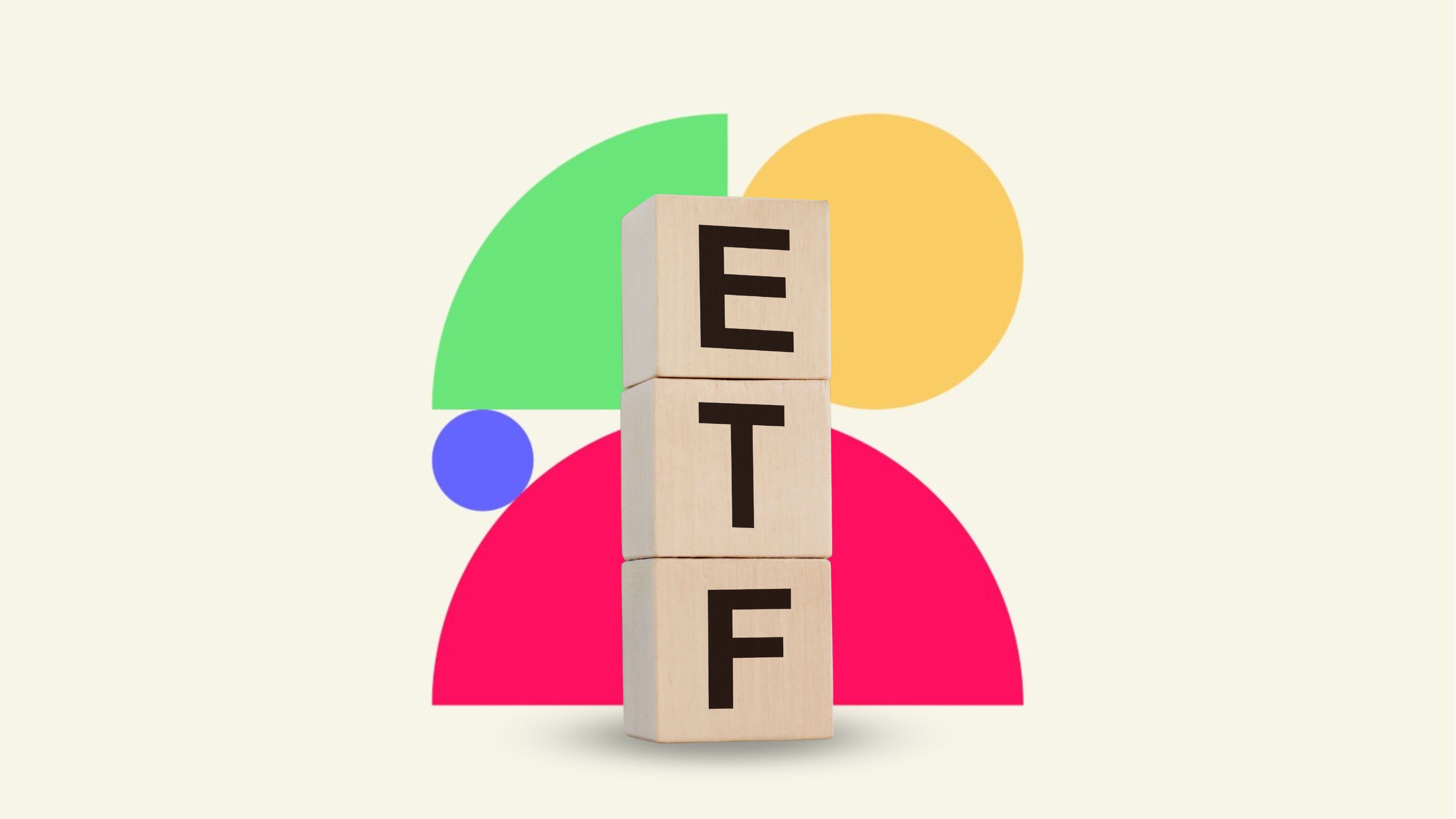
If you've ever tried investing in ETFs (Exchange-Traded Funds) and found yourself staring at acronyms like "VUSA", "IWRD", or "XD5E", wondering if you were accidentally ordering Star Wars droids, you're not alone! Welcome to the wild and wonderful world of ETF ticker symbols - where letters and numbers collide, and where understanding what you're buying is half the battle.

In this guide, we're going to break down everything you need to know about reading ETF ticker symbols. No PhD in Economics required, no jargon-stuffed nonsense. Just clear, straight-talking explanations to help you invest with confidence.
What is an ETF ticker symbol?
A A unique combination of letters and/or numbers used to identify a particular investment, such as a share or ETF, on a stock exchange. For example, the ticker for Apple stock on the NASDAQ index is AAPL, and the ticker for the Vanguard S&P 500 UCITS ETF is VUSA. is a unique series of letters (and sometimes numbers) that identifies a specific investment, such as an individual stock or an ETF, on a stock exchange. In the case of ETFs, you can think of its ticker as its nickname - short, snappy, and searchable.
ETFs can track a wide range of international markets and themes, and are not restricted just to investments in the UK. For example, you might be sitting in rainy Manchester but investing in sunny California - via a US-listed ETF.
A typical ticker symbol is between 3-5 characters long. Some real-world examples include:
- VUSA - Vanguard S&P 500 UCITS ETF
- IWRD - iShares MSCI World UCITS ETF
- XD5E - Xtrackers MSCI Europe Small Cap UCITS ETF
Each letter usually means something, but (and here's the kicker) - there's no universal rulebook. Different ETF providers have their own quirks.
Why are ETF ticker symbols important?
Put simply, because investing without knowing what you're buying is like cooking without knowing the ingredients. Sure, you might make something edible. Or you might end up with a burnt soufflé and some losses that could have been avoided if you’d known what you were in for!
Knowing your tickers = knowing where your money is.
How to decode an ETF ticker symbol
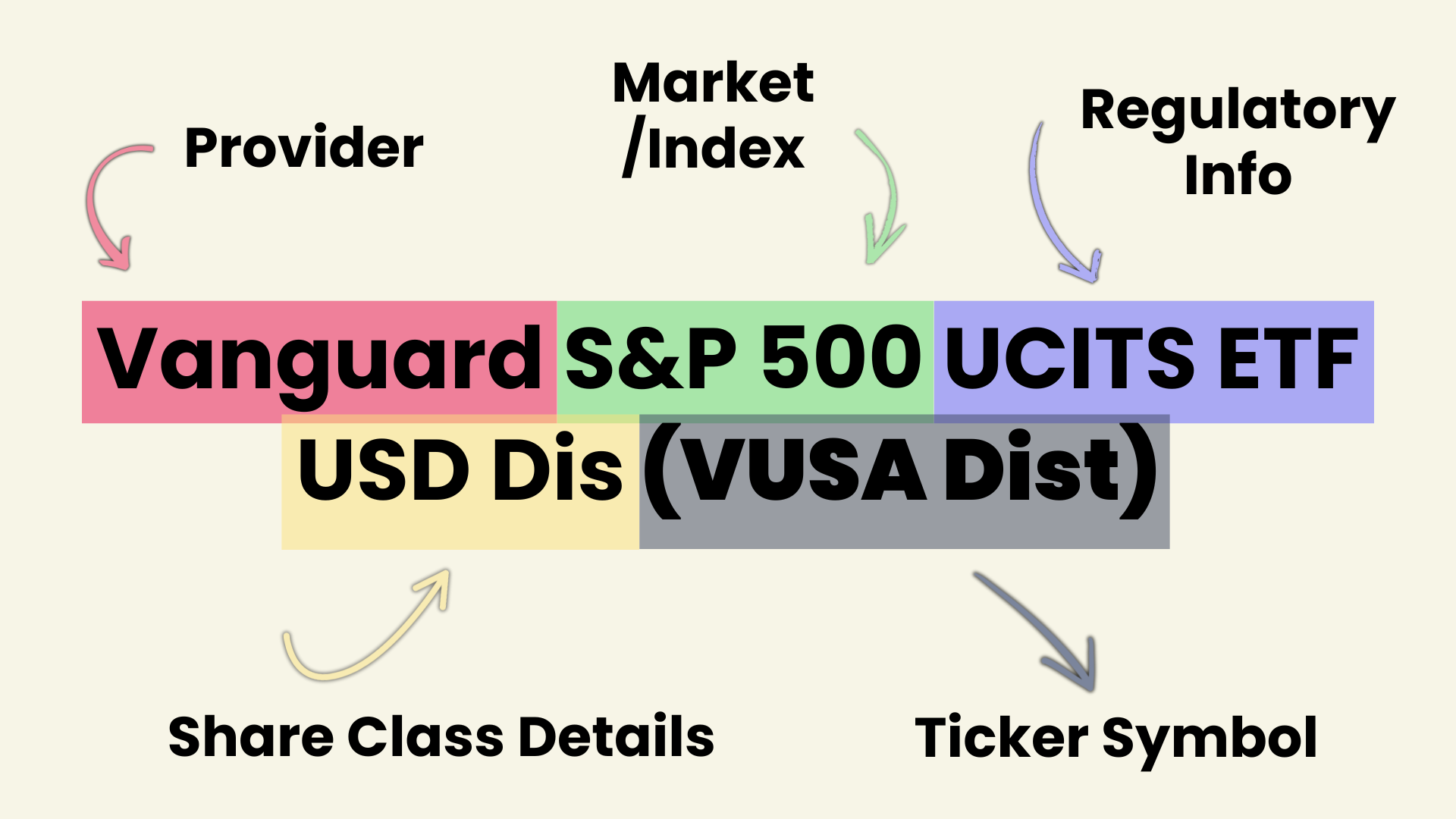
Let's break it down. Here's a rough guide to what the letters and numbers often tell you (note that they don’t always appear in the same order).
1. The provider
Often, the first one or two letters hint at the company (An individual or company that creates and manages investments. Asset management firms develop, manage and continually monitor investment products, such as funds. Examples of large asset management firms include BlackRock, Fidelity, and Invesco.) which provides your chosen ETF. This might look like:
- V = Vanguard
- I = iShares (by BlackRock)
- X = Xtrackers (by DWS)
Spotting the provider behind your ETF can be useful because each has different costs, strategies, and reputations. Some ETF providers, like Vanguard, have built a reputation for low-cost, no-fuss investing. Others might be known for offering more niche or specialist products.
2. The market or index
The middle letters often point you to the market or index the given ETF tracks or emulates, albeit obliquely. For example:
- USA = S&P 500 (the largest 500 companies in the US)
- WRD = MSCI World = Global developed markets
- EM = Emerging Markets
Again, it isn’t gospel, but is generally helpful when trying to understand the key features of your ETF.
3. Share class details
Some ETFs offer numerous versions of their shares which differ in what they do with your dividends or which currency they’re listed in. This is the “share class” of the ETF you’re investing in and some key differences may include:
Acc = Accumulating
Instead of paying out A cash bonus shareholders get in return for investing in something. Dividends can be paid out on a monthly, biannual or annual basis. to you, these ETF shares automatically reinvest earnings back into the fund. Great if you're building wealth over the long term and don't need a regular income just yet.
Dist = Distributing
These ETF shares pay any dividends earned straight into your account as cash. Handy if you want to receive a regular income from your investment portfolio.
USD/GBP = Denotes the fund's trading currency
You'll also often see clues about the currency your ETF shares are listed in. This is important to watch for, as holding assets in a different currency than your own can expose you to exchange rate swings (also called “The market where currencies are traded. FX trading involves buying and selling currencies with the aim of profiting from fluctuations in exchange rates. risk”). In other words, your investment gains could be impacted by an unfavourable exchange rate when you decide to cash in – potentially leaving you with less profit than you thought you had.
4. Regulatory information
For most UK investors, this is where the term “UCITS” comes in. You’ll see it all over UK ETFs. It essentially identifies that this fund follows EU rules and standards - even post-Brexit.
If you're a UK investor, you usually want UCITS-compliant ETFs for better regulatory protection and tax treatment. If you see "non-UCITS", proceed with extreme caution. Unless you enjoy paperwork and headaches.
5. Bonus factors to look out for
- Legacy codes: Some tickers have legacy codes from mergers and acquisitions.
- Sub-brand or range: Sometimes ETF providers group products under a sub-brand like "Core" or "Prime". These labels usually indicate a particular strategy or focus. For example, "Core" ETFs often represent low-cost, broadly The process of spreading your investment portfolio across different asset classes, such as partially in shares and partially in bonds, in order to reduce risk. building blocks ideal for beginners and long-term investing goals, while "Prime" might hint at a slightly more specialist or premium twist for the more experienced or those looking to capitalise on a niche.
- Strategy or leverage: Some ETFs are not designed to simply track a market; they aim to amplify or invert its movements. Ticker symbols may include hints like "Short," "2x," "Double," or "3x". These mean you're getting a The act of borrowing money to fund a company's operations. It can be expressed as a ratio, where the cost of the borrowed amount is compared to the overall value of the company - this is called the gearing or leverage ratio. or inverse strategy - in other words, either magnifying gains (and losses!) or betting against the market. Not beginner-friendly and definitely not for the faint-hearted.
- Funny ticker symbols: Newer thematic ETFs (like clean energy or AI-focused funds) often have creative and amusing tickers to stand out – e.g. Procure Space ETF (UFO), VanEck Agribusiness ETF (MOO), RIZE Sustainable Future of Food UCITS ETF (FOOD), and Petco (WOOF).
Decoding tickers at a glance
Factor | Example | What it tells you |
Provider | Vanguard (V), iShares (I), Xtrackers (X) | Helps you understand cost structures, reputation, and style |
Market/Index | S&P 500, MSCI World, Emerging Markets (EM) | Shows the region or sector your ETF is tracking |
Acc/Dist | Accumulating (Acc) or Distributing (Dist) | Indicates if dividends are reinvested or paid out |
Currency | GBP, USD, EUR | Tells you about potential currency risks and conversion fees |
Regulatory Details | UCITS | Means it meets EU standards and is eligible for ISA and pension investors in the UK |
Sub-Brand or Range | Core, Prime, etc | Indicates if the ETF is part of a special low-cost or premium offering |
Strategy or Leverage | Short, 2x, 3x, Double | Warns if the ETF uses leverage or bets against markets – basically, not suitable for less confident investors! |
Legacy Codes | Random-looking symbols due to mergers | Might explain weird ticker names that don’t seem to match |
Amusing Thematic Tickers | NATO, MOO, FOOD | Designed to be memorable, but always check what’s under the hood in the KIID* |
Factor | Example | What it tells you |
Provider | Vanguard (V), iShares (I), Xtrackers (X) | Helps you understand cost structures, reputation, and style |
Market/Index | S&P 500, MSCI World, Emerging Markets (EM) | Shows the region or sector your ETF is tracking |
Acc/Dist | Accumulating (Acc) or Distributing (Dist) | Indicates if dividends are reinvested or paid out |
Currency | GBP, USD, EUR | Tells you about potential currency risks and conversion fees |
Regulatory Details | UCITS | Means it meets EU standards and is eligible for ISA and pension investors in the UK |
Sub-Brand or Range | Core, Prime, etc | Indicates if the ETF is part of a special low-cost or premium offering |
Strategy or Leverage | Short, 2x, 3x, Double | Warns if the ETF uses leverage or bets against markets – basically, not suitable for less confident investors! |
Legacy Codes | Random-looking symbols due to mergers | Might explain weird ticker names that don’t seem to match |
Amusing Thematic Tickers | NATO, MOO, FOOD | Designed to be memorable, but always check what’s under the hood in the KIID* |
*Bottom line: Always double-check the full fund name and Key Investor Information Document (KIID) of an ETF before buying anything. You can find the KIID by searching for the specific ETF you’re interested in on the provider’s website. It is usually available as a downloadable PDF.
Real-world ETF examples
Example 1: VUSA
- V = Vanguard
- USA = USA (S&P 500 index)
- Full name = Vanguard S&P 500 UCITS ETF
Tracks the biggest 500 companies in America. EU regulation-compliant. Good for beginner investors looking for diversified, global giants.
Example 2: IWRD
- I = iShares
- WRD = World
- Full name = iShares MSCI World UCITS ETF
Gives you access to a broad range of developed market stocks across the globe. EU-regulation compliant.
Example 3: ROBO
- ROBO = Robotics and Automation
- Full name = ROBO Global Robotics and Automation UCITS ETF
A specialist An investment approach that focuses on broad, long-term trends, such as climate change, artificial intelligence, ageing populations, or clean energy. Investment themes help investors identify which businesses might prosper as a result of these changes. ETF, focusing on companies driving innovation in robotics, automation, and artificial intelligence. Still EU-regulation compliant and could be suited to those who want to invest in AI and the future of technology.
Discover the most popular ETFs of the month
5 quick tips for beginner ETF investors
10 Key Investing Terms Beginners Need to Know
Common ETF investing mistakes to avoid
Final thoughts: Don't get your tickers in a twist!
ETF ticker symbols and names might seem confusing at first, but they're simply shortcuts to help you spot key information about a fund: who runs it, what it invests in, and how it's structured. Once you get the hang of them, you'll find researching investments quicker and avoiding costly mistakes much easier.
Smart investing isn’t about knowing every bit of jargon - it’s about understanding the basics properly. Recognising a UCITS-compliant ETF, spotting whether dividends are accumulating or distributing, and knowing when currency risks are lurking are core skills every beginner needs.
Take your time, stay curious, and always double-check before clicking 'buy'!
Dive into more ETF info in our full Hub