




What fees will you pay when you invest? 8 charges explained
Edited by Joss Hysi
24 Dec, 1970
There are eight main fees UK investors run into: Ongoing Charges Figure, performance fees, transaction fees, initial charges, platform fees, dealing fees, currency conversion fees and exit fees. On a £10,000 pot, the difference between a 0.5% and 2% annual fee is over £4,000 after 20 years - so knowing what you're paying, and to whom, is one of the easiest ways to protect your returns.

It’s essential to understand how fees and charges work when you're investing. Although most fees are small compared to the overall size of an investment portfolio, they can eat into your returns. Being informed can help you make better investment decisions and potentially preserve more of your gains.
Essentially, if you’re able to minimise fees, you can keep more of your investment returns to yourself!
Below is a breakdown of where investment fees come from, the eight main fees investors in the UK are likely to come across, and some examples of how these work in practice.
Who charges investment fees?
There are a few different entities which may charge you to invest - your investment platform, your fund provider, and your fund manager.
Let's quickly recap on what these are and where they fit into your investing journey:
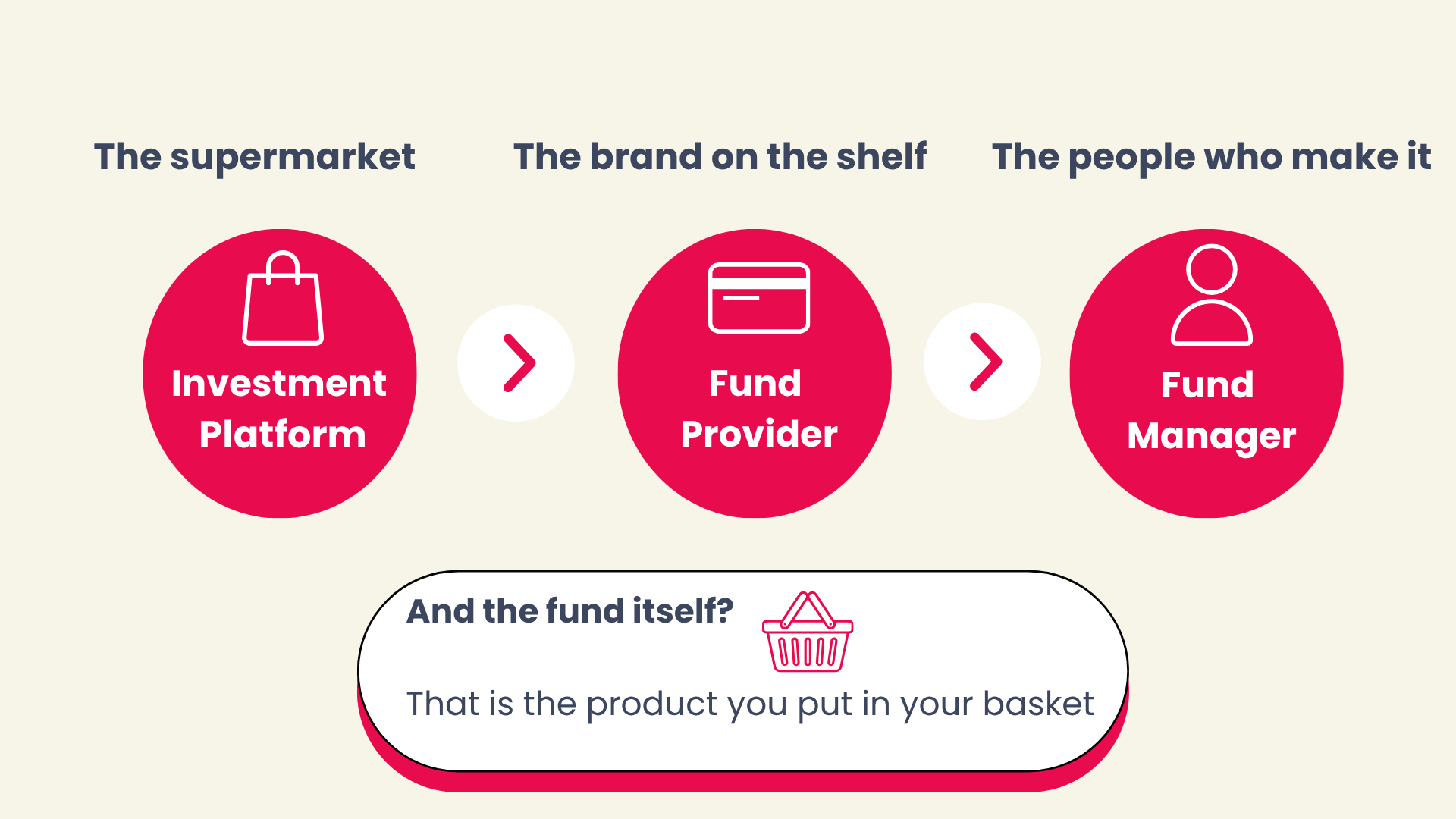
Let's imagine you're looking to invest in a fund. It helps to know who's actually involved when you invest, because each of them takes a small slice. Think of it like a supermarket. The investment platform is the shop you buy from, the fund provider is the brand whose product you're picking off the shelf, and the fund manager is the team who actually make it. Your money passes through all three, and each one charges for its part. That's why a single investment often comes with more than one fee attached, and why it pays to know what each layer costs before you buy.
- Investment platform: Hargreaves Lansdown is the website or app where you have an account. You use this platform to buy, sell, and manage your investment in your BlackRock fund. Your investment platform may also be called your "account provider".
- Fund provider: BlackRock is the company which offers the fund you're investing in. They employ the fund managers who run the fund and make investment decisions. Your fund provider may also be referred to as your "asset manager".
- Fund manager: The specific team of experts at BlackRock who manage the fund, making decisions about the underlying investments within the fund to maximise returns and achieve the best possible outcome for shareholders.
These definitions are not mutually exclusive, however. For example, if you set up an ISA with AJ Bell and then used this account to invest in an AJ Bell fund, AJ Bell would be your investment platform, your fund provider and your fund manager.
Out of these entities, you're most likely to encounter fees charged by your fund manager - for the cost of managing your chosen investment - and your investment platform - for the service of setting up and handling your account. Let's dig a little deeper into what specific fees you may come across for each.
What does your fund manager actually charge you?
These are the fees that come directly from your fund manager - i.e. the specific team that runs the product you're investing in. They include: Ongoing Charges Figure, performance fee, transaction fee and an initial charge.
1. What is an Ongoing Charges Figure (OCF)?
The OCF represents the annual cost of managing the fund. It includes management fees, administrative expenses, and most other operational costs. This fee is deducted from the fund’s value, meaning you won’t see a direct charge, but will notice its effect on your returns.
Example: If a fund has a 1% OCF and your investment is worth £10,000, you’ll pay £100 annually in fees, which reduces your overall returns.
To illustrate this further Fidelity Index world as at 30.07.2026 had an OCF 0.12%. This would cost you £12 in fees per year.
Active funds, which are managed by professionals trying to outperform the market, usually have higher OCFs (1%-2.5%) because of their research and trading costs. On the other hand, passive funds - such as index funds or most ETFs - often have lower OCFs (0.1%-0.75%), as they simply track a market index without requiring frequent intervention.
2. What is a performance fee?
Performance fees are charged by some actively managed funds if the fund exceeds a predetermined benchmark or exceeds a specific rate of return. In other words, this fee is a reward for the fund manager’s success in outperforming the market.


Example: A fund with a 15% performance fee and £1,000 in outperformance would cost you £150 in additional fees.
While performance fees may help to incentivise fund managers to achieve the greatest possible returns, you could argue that they can also inevitably encourage managers to take excessive risks to maximise short-term gains and earn higher fees as a result. Therefore, for beginner or less confident investors, it’s typically a good idea to focus on funds with low or no performance fees – especially if their track record doesn’t justify the added expense.
3. Are there hidden transaction fees inside a fund?
Yes. Some costs, such as trading expenses incurred by the fund manager when buying and selling assets within the fund, are less visible. These transaction fees are usually included in the OCF, but they can vary significantly depending on the fund’s trading strategy.
Example: A high-turnover fund that frequently buys and sells stocks will have higher trading costs compared to a low-turnover fund that holds assets for longer periods.
Funds with lower turnover tend to have lower hidden costs. Passive funds like ETFs often have minimal trading activity, making them a cost-efficient option for long-term investors who don’t mind sitting and watching their returns compound over time.
4. What is an initial charge (entry fee)?
The initial charge or entry fee is a one-off fee you may have to pay when you first invest in a fund. This fee, typically expressed as a percentage of your investment, is meant to cover the fund provider’s* costs for handling your money.
*Your fund provider is the firm that offers the fund you're investing in. Your fund manager is the specific team within the provider that operates your chosen fund.


Example: If a fund has a 3% initial charge and you invest £1,000, £30 would be deducted at the point of set-up and only £970 would be invested in your new account.
Initial charges used to be more commonplace, but they have become less prevalent in recent years due to the rise of low-cost investment platforms. Most platforms now waive this fee for many funds, making it easier than ever for you to get started without losing a chunk of your capital upfront.
What does the investment platform charge you?
These are the fees that come from the platform you're investing with - i.e. the company that runs the ISA/SIPP/etc account you use to invest. These can include: account fees, dealing fees, platform currency conversion fees and exit fees.
1. What is a platform fee (Account Fee)?
Platform fees, or account fees, are among the most common charges investors come across. These are the fees you pay to a platform for providing access to funds, managing your account, and offering tools like research and portfolio tracking– basically, it’s the charge for using their service. This fee can be based on a percentage of your portfolio value or charged as a flat fee.


Example: A platform charging a percentage fee might cost 0.25% annually on a £20,000 portfolio, amounting to £50 per year. Alternatively, a flat-fee platform might charge £10 per month, totalling £120 annually.
Popular investment platforms like Hargreaves Lansdown, interactive investor, and Vanguard have different pricing structures. For smaller portfolios, percentage-based fees may be more economical. Conversely, flat-fee platforms often become cost-effective as your portfolio grows. Comparing platforms carefully is crucial to minimise these costs.
Check out our shortlist of the cheapest ISA providers
2. What are dealing fees?
Dealing fees are common. These are the charges you incur when you buy, sell, or switch funds. Some platforms offer commission-free trades, especially if you set up regular monthly contributions, but others may charge per transaction.


Example: A platform charging £10 per fund trade means buying and then selling a fund would cost £20 in total in transaction fees.
Keen investors trading regularly or making monthly contributions should consider platforms with no dealing fees for regular investments.
3. What are platform currency conversion fees?
Platform currency conversion fees may apply when investing in funds denominated in foreign currencies, such as US dollar or euro funds. These fees are charged by platforms for converting your GBP into the required currency and vice versa when you sell.

Example: A 1% currency conversion fee on a £1,000 transaction would cost you £10.
Currency fees can add up over time, especially for regular investors in international funds. They tend to range from 0.15-1.25%, depending on the platform. Additionally, exchange rate fluctuations can impact your returns, so be mindful of both the fees and risks associated with foreign investments.
4. What are exit fees?
Exit fees are, unsurprisingly, imposed when you sell your investments or transfer them to another provider. While many modern platforms have eliminated exit fees altogether, some legacy providers may still charge them.


Example: If you withdraw £5,000 from a fund with a 2% exit fee, you’ll lose £100 in charges.
Always review the T&Cs of a platform before investing. If you anticipate needing to access your funds or transfer them to another provider, choosing a provider with no exit fees could save you money (and a headache!).
How can fees impact you investment returns?
Even seemingly small fees can significantly reduce your long-term returns due to The process of adding interest on interest. This happens when the money you make starts to snowball and makes its own money. Compounding is good when you're saving or investing, but if you owe money, it can be bad..
For example:
- A £10,000 investment with a 0.5% annual fee would grow to £16,470 over 20 years at a 5% return rate.
- The same investment with a 2% annual fee would grow to only £12,440 over 20 years.
Minimising investment fees leaves more of your money in the market and working for you - highlighting the importance of choosing low-cost funds and platforms to preserve your wealth.
The main charges for UK investors to watch out for include initial charges, OCFs, performance fees, platform fees, transaction costs and exit fees – and of course any hidden fees which could be chipping away at your returns.
To minimise fees, consider:
- Opting for low-cost funds or investments, such as index funds or ETFs
- Using platforms with competitive charges that suit your portfolio size
- Review the Key Investor Information Document (KIID) for each fund you invest in to understand the fees involved (you can usually find this by Googling the name of your fund)
The provider comparison below shows just how much this plays out in practice - with platform fees alone ranging from around 0.5% to over 1.4% depending on where you hold your ISA. By staying informed and comparing costs across providers like these, you can make cost-effective decisions, preserve your returns, and build wealth more efficiently over the long term!






Post a comment:
This is an open discussion and does not represent the views of Boring Money. We want our communities to be welcoming and helpful. Spam, personal attacks and offensive language will not be tolerated. Posts may be deleted and repeat offenders blocked at our discretion.
Your opinion matters
Be the first to comment.